




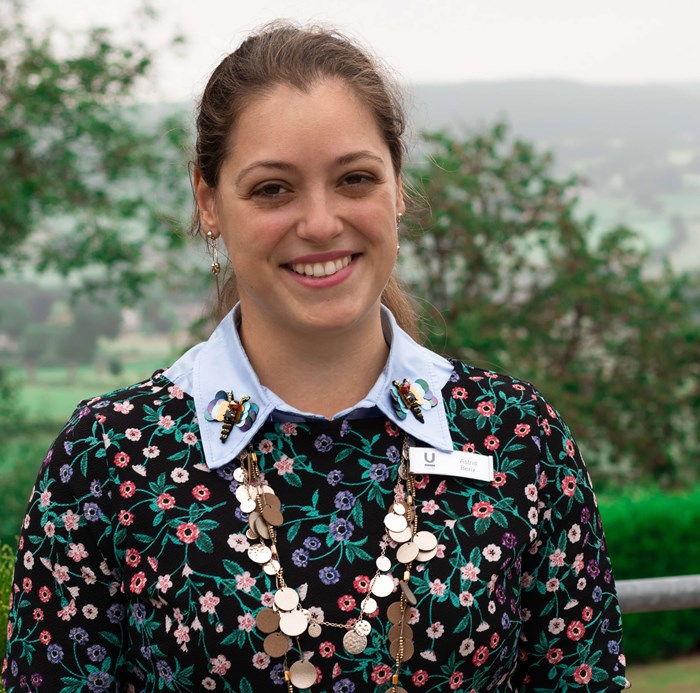
What is it like to work as a sociotherapist in the U-center treatment center? My name is Astrid Berix, 27 years old and I live in Maastricht. Originally I am a music therapist. I have now been working at U-center for four years, previously as a sociotherapist and since March of this year as a therapeutic worker in U-center's ambulatory team.
Why do you work in the mental health system?
I always found it remarkable how naturally everyone takes it for granted to be healthy. But when something happens in life it is seen as an abnormality. Psychological symptoms are then often seen as something elusive and incomprehensible. It's all in your head. This while it is so common (one in four people go to the doctor with psychological complaints).
I love working on the destigmatization of mental illness and making it clear to people that this is not something weird. Yes, you're allowed to feel bad, it's allowed to be tough and we'll work together to see how you can deal with it and most importantly, no you're not weird.
Why do you work at U-center
I joined U-center because we are pioneering excellent mental health care. We do not assume stigmas and we do not treat a disorder, but the person as a whole. Every area of life is scrutinized and looked at. We look at how a person can become happier here. People therefore also stay here in their own hotel room and have access to a restaurant, gym and swimming pool. There are no night rounds with flashlights or a locked outside door. People here are treated as people, not as disorders.
Quote
We make clients feel like human beings again, just with feelings, thoughts and problems.
Astrid Berix - U-center Therapist
What makes your daily work fun at U-center?
Above all, I get energy from being able to guide people in an approachable way. Especially as a sociotherapist, you really have personal contact with the clients and are there for them when they need you. This is in contrast to psychologists who have a treatment moment with the client.
With us, the client may indicate at any time what he or she needs at that moment. We then discuss together questions like, "what exactly is difficult, what are you feeling right now, what is going on, what are triggers and how do we get through the day together?" We also eat with the clients and sit in the lounge where people stay between sessions. We play a game with them and go for walks with the clients. We make the clients feel human again, just with feelings, thoughts and problems.

What are the challenges?
Again, the challenge lies directly in that low-key aspect. For example, if someone has a panic attack during a consultation, what do you prioritize? It is important to be informed, but the panic attack also needs guidance.
Fortunately, we have a strong, committed and social sociotherapy team. We strengthen and help each other. Even if someone is having a hard time or needs a little help we are ready for each other immediately and take over for each other.
What does your workday at U-center look like?
Each work day is different and depends on the shift you have. We have five different shifts.
Start of the day
For sociotherapists on day shifts, your shift begins with the handover from the night shift. There we discuss whether people have been awake and any details from the late shift. Then you get the medication dispensing and join the breakfast.
Breakfast and daily supervision
During breakfast you check if everyone is present, how people woke up and if people are on time for their first session. Furthermore, we accompany people through the day, by having a chat, helping with psychological and somatic complaints and offering a listening ear at the difficult moments.
Receipt of new recordings
On Mondays and Wednesdays, we are busy preparing for new admissions coming in. When new admissions arrive, we welcome people, give a brief presentation with a practitioner about U-center and guide the client through the day (think tour, have lunch together, take somatic measurements, accompany them to their first appointments, etc.).
Transfer
You give a handover to the late shift of things that still need to be done for the new clients. You also indicate if there are any details of the client group who have been staying with us for some time. The late shift then takes over and accompanies people into the evening, joining them for dinner and sometimes offering an evening activity (think movie, walking etc.).

Working at U-center
Will you become my new colleague?
My appeal to enthusiastic, potential new colleagues would be: are you a committed person and do you enjoy guiding people at times that are difficult for them? Then you are the right person to come and work at U-center as a sociotherapist. Don't hesitate to apply within this warm team and experience the U-center atmosphere for yourself!